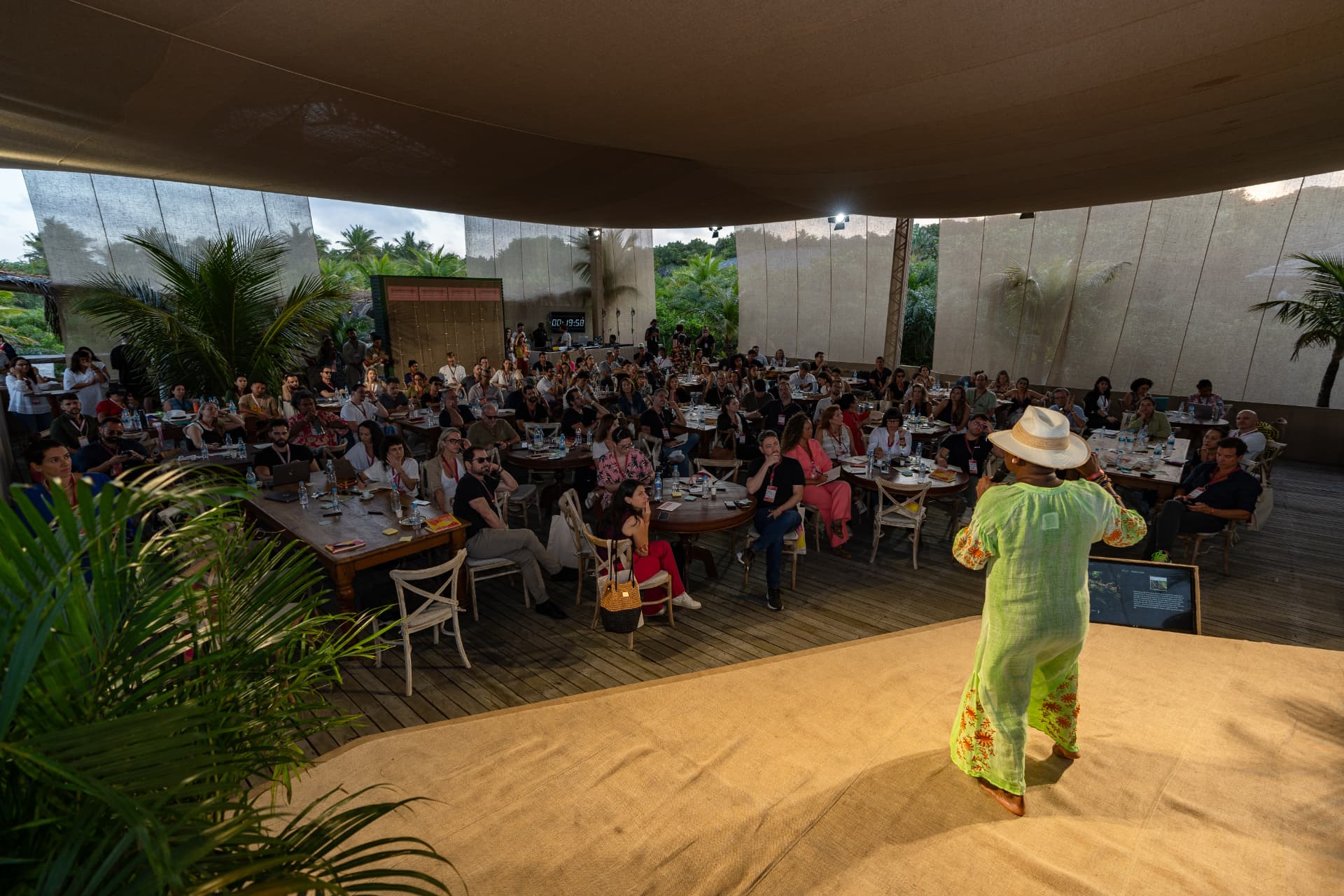
What's missing from the design process? A pause.
Leaders are supposed to have all the answers, stay ahead of every AI development, hold the business and everyone else's wellbeing, with no space left to admit they don't know. That's the room I'm good in. People say things there they don't say anywhere else.
Download speaker pack (PDF)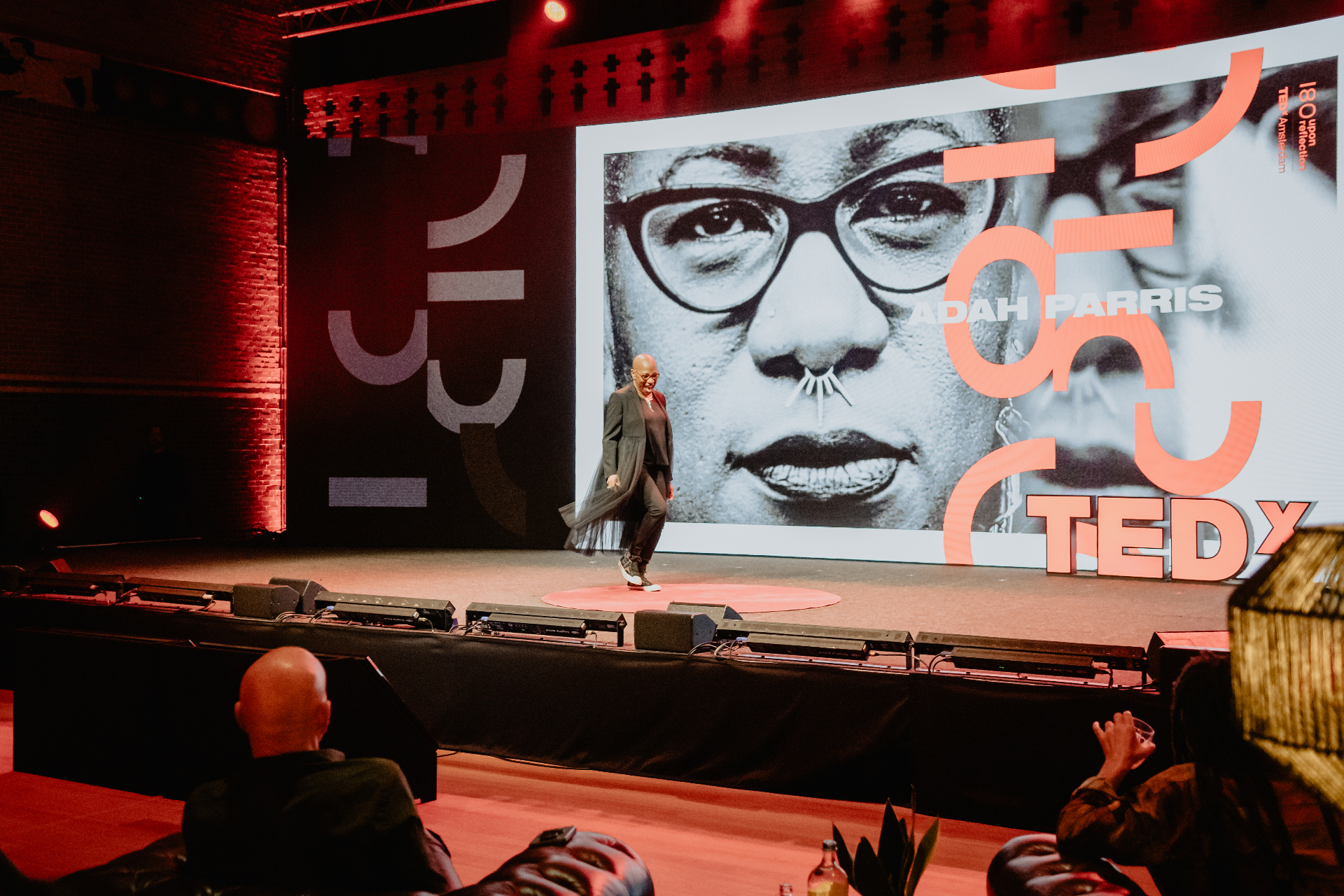 TEDxAmsterdam · 180 Upon Reflection
One idea. Four rooms: Cyborg Shamanism. Cartography Is Not Home. Human. Humility. Humus. Who Owns Intelligence?, new, in development.
For technology, leadership & innovation conferences
Cyborg Shamanism: Leading Alongside AI
Your delegates have sat through the AI briefings. They know the tools. What they have not been given is language for the deeper change affecting attention, judgement and trust. Moving faster will not solve it.
The most urgent question in any room right now is not "how do we use AI?" It is "why have we stopped listening?" These are not separate questions. This keynote reframes the AI conversation as a question of attention, and gives leaders the precise language for what they have been sensing but could not say.
Audiences leave with:
- · A new frame for AI adoption that reduces resistance and increases coherence
- · Language for the cultural shift that strategy documents can't capture
- · A diagnostic question every leader can apply immediately to their team
For arts, culture & research spaces
Cartography Is Not Home
Your audience works at the edge of knowledge, questioning whose frameworks get funded, whose intelligence gets cited, whose future gets imagined. They've felt the limits of the inherited maps. They want someone who can name what the maps leave out.
The systems we inherited for deciding what counts as knowledge or intelligence were built on limited assumptions. Drawing on ongoing artistic research across Egypt, Guyana and Nigeria, this keynote asks what becomes visible when we include the knowledge those systems left out. The people with the most relevant knowledge are often the last to be asked.
Audiences leave with:
- · A framework for epistemic diversity that goes beyond representation
- · Practical methods for surfacing the intelligence your systems aren't designed to see
- · A new way to talk about decolonial leadership without the language that shuts rooms down
For regenerative, ecological & purpose-driven spaces
Human. Humility. Humus.
Your audience is already committed to regenerative thinking. What they're looking for is depth, a speaker who can hold the ecological and the personal together, and who speaks from practice rather than theory.
Three words from the same root. This keynote examines what was lost when our systems became disconnected from nature, and what becomes possible when we reconnect. It offers a deep listening practice for leaders working with ecological responsibility and regenerative change.
Audiences leave with:
- · A memorable framework for regenerative leadership that connects ideas to action
- · A practical way to connect ecological thinking with personal experience
- · Practical language for purpose that connects daily decisions to long-term legacy
For AI ethics, technology, futures & foresight conferences
New · In development
Who Owns Intelligence?
Nature Wrote the Code First, and Now They've Put a Fence Around It
Your audience is navigating AI strategy while sensing that something deeper is at stake. They've read the policy papers and the risk frameworks. What they haven't been given is a frame for the central question: who gets to own intelligence, who is granted access, and who bears the cost of the infrastructure that powers it.
This keynote examines the extractive logic behind the technology we have been asked to trust, from ideas copied and enclosed for profit to communities carrying the environmental and social cost. It asks what intelligence could look like if we treated it as something living and shared, rather than something to map and own.
Audiences leave with:
- · A frame for AI sovereignty that goes beyond regulation and policy
- · Language for the extractive logic underneath AI infrastructure, usable in boardrooms, not just activist spaces
- · A research proposition connecting ancestral intelligence to the most urgent questions in responsible AI
Download speaker bio, press kit and media resources →
The maps and research behind these talks live at Research →
Programming a stage and weighing up names? Booking a futurist speaker →
Keynote · 45 to 60 minutes
Extended Session · 90 minutes with structured audience dialogue
Immersive Experience · Multi-day, incorporating live field recordings, material objects, and structured audience practice
Every talk is written for the room it is given in. Custom programmes on request.
Google · Meta · Lloyds Banking Group · Unilever · NatWest · Klosters Forum · Deeply Human Summit · Tate Modern · TEDx · CogX · World Trade Centre Amsterdam · IAB Italia · London Interdisciplinary School · Medicine Festival
"Adah gave a fresh perspective the audience really held onto, and fired us all up to think differently, out of the day-to-day detail."
· Fiona Couper, Chief Marketing Officer, VCCP
"Her grasp of the issues was thorough, and I actually learned things about my own work. One of those discussions you spend days unpacking."
· Paul Mason, journalist and film-maker
"Adah brought fresh thinking and unconventional exercises, and pushed us all to reflect on what really matters. So much positive feedback from the team."
· Barbara Ryl, Global Brand Manager, Unilever
"Adah connects across topics to put together the bigger picture. Immediate, actionable learnings and real food for thought. Invaluable."
· Andy Postert, Google
Speaking enquiries, adah@adahparris.com